


The tanker trailer is a vehicle designed to load liquids, dry cargo or gases (fuel/oil, bulk cement, asphalt, pneumatics). There are a wide variety of liquids that can be transported, so many variants of this trailer are designed by a lot of companies. The trailers are difficult to drive because of their high center of gravity. Tanker trailers may be insulated, pressurized or non-insulated, non-pressurized, and designed for just one company or for mass production.
Benefits of Tanker Trailer
The material is not easy to deteriorate
Because the tank is basically a sealed container, the influence of the external environment and climate conditions is small, the goods can be better protected in transit, not easy to deteriorate and damage, thus ensuring the physical and chemical properties of the material is not easy to change. Tanker trailers are ideal for transporting food (beverages), chemicals, or other items that need to be protected from moisture or heat.
Conducive to safe transportation
Ceramic or glass jars are generally used as containers when transporting corrosive or toxic substances. When such items are transported by fuel tanker trailers, the likelihood of accidents is greatly reduced and the transport and handling of such items can be carried out more safely.
Increased efficiency
Tanker trailers offer enhanced efficiency in transporting liquids or gases compared to traditional methods such as drums or barrels. Their large capacity allows for the transportation of significant quantities in a single trip, reducing the need for multiple smaller shipments and associated logistical costs.
Reduce transportation costs
Tanker trailers provide cost-effective transportation solutions for liquids and gases, offering economies of scale and reducing per-unit transportation costs. Additionally, bulk transport minimizes handling and packaging expenses, further contributing to overall cost savings for businesses.
-
![Fuel Transport Tanker]() Fuel Transport Tanker3 axles oil tanker semi-trailer/chemicing liquid tank trailer/fuel tanker semi-trailer for saleview more
Fuel Transport Tanker3 axles oil tanker semi-trailer/chemicing liquid tank trailer/fuel tanker semi-trailer for saleview more -
![Fuel Tanker Semi Trailer]()
-
![Petroleum Storage Tanks]()
-
![Aluminium Tanker]() Aluminium Tanker3 axles and 4 axles 60000 liters aluminum oil fuel tanker tank semi trailer Product Description 3 axles and 4 axles 60000 liters aluminum oil fuel tankerview more
Aluminium Tanker3 axles and 4 axles 60000 liters aluminum oil fuel tanker tank semi trailer Product Description 3 axles and 4 axles 60000 liters aluminum oil fuel tankerview more -
![Milk Tanker Trailer]() Milk Tanker Trailer3 axle 45000 50000 liters Stainless Steel Milk Tanker Water Oil tank Semi Truck Trailer for saleview more
Milk Tanker Trailer3 axle 45000 50000 liters Stainless Steel Milk Tanker Water Oil tank Semi Truck Trailer for saleview more -
![Oil Tank Semi Trailer]()
-
![Acid Tanker Trailers]() Acid Tanker TrailersChemical transport tanker truck Acid tanker trailer Sulfuric acid tanker trailerview more
Acid Tanker TrailersChemical transport tanker truck Acid tanker trailer Sulfuric acid tanker trailerview more -
![Sulphuric Acid Tanker]() Sulphuric Acid TankerChemical transport tanker truck Acid tanker trailer Sulfuric acid tanker trailerview more
Sulphuric Acid TankerChemical transport tanker truck Acid tanker trailer Sulfuric acid tanker trailerview more -
![Asphalt Tanker Trailer]() Asphalt Tanker TrailerHigh quality 3/4 Axle Insulated Bitumen Transport Tanker Semi Trailerview more
Asphalt Tanker TrailerHigh quality 3/4 Axle Insulated Bitumen Transport Tanker Semi Trailerview more -
![LPG Tank Trailer]() LPG Tank Trailer3-4 axles 50000liters oil tanker semi-trailer/LPG trailer/fuel tanker semi-trailer for saleview more
LPG Tank Trailer3-4 axles 50000liters oil tanker semi-trailer/LPG trailer/fuel tanker semi-trailer for saleview more


Why Choose Us
Factory
The vehicle factory was established in 2007, covering an area of more than 200 acres, with a production plant of 12,000 square meters and a total of more than 800 employees.
Professional team
We have a professional team that will do its best to meet the needs of customers and partners, and the society will work together to achieve maximum value.
Provide economical solutions
We are committed to providing customers with the most economical transportation solutions through long-lasting quality, preferential prices, and permanent parts supply services.
Strong production capacity
We have first-class assembly line production equipment with strong production capacity, adopt advanced production technology and high-quality raw materials and parts, and have a reliable quality assurance system.
What Types Of Liquids Or Gases Can Be Transported In A Tanker Trailer?
Typically carries types of liquids include water, petroleum products such as gasoline, diesel, and jet fuel, chemicals like acids, solvents, and fertilizers, as well as food-grade substances such as milk, edible oils, and liquid sweeteners. Additionally, tanker trailers can transport gases such as liquefied petroleum gas, liquefied natural gas (LNG), oxygen, nitrogen, and carbon dioxide.
What Safety Features Are Included In A Tanker Trailer?
Tanker trailers are designed to transport various types of fuels, including gasoline, diesel, and aviation fuel. These trailers are built with safety features such as multiple compartments, baffles, and surge control systems to prevent fuel sloshing during transportation. Tanker trailers must adhere to stringent regulations to ensure the safe delivery of flammable liquids.
Tanker trailers are equipped with a pumping system for loading and off-loading liquids. Tanker trailers have capacities ranging from 5,000 to 11,000 gallons for liquid cargoes and from 500 to 8,000 cubic feet for gas cargoes. However, specialized tanker trailers may have larger or smaller capacities to accommodate specific transportation requirements.
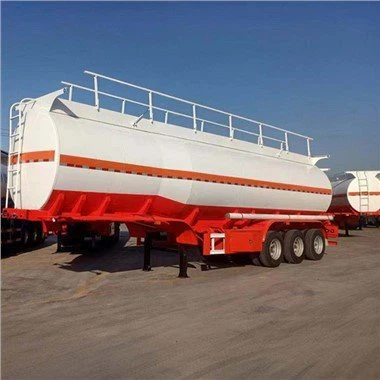
What Are the Dimensions of a Tanker Trailer?
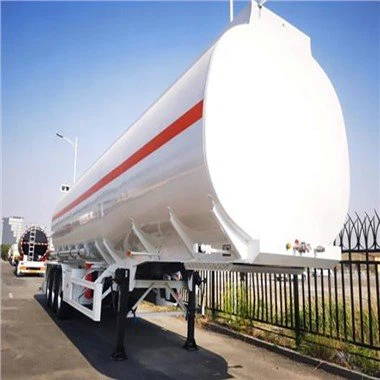
Typical dimensions for a tanker trailer include a length ranging from 30 to 53 feet, a width of 8 to 8.5 feet, and a height of 11 to 12 feet. These dimensions allow for efficient transportation while adhering to regulatory requirements for road safety and clearance. Tanker trailers may also have variations in height and width to accommodate specific types of cargo or to meet regional transportation regulations.
Fuel Tanker Trailer Loading Process
Bottom loading: In bottom loading, chemicals are passed into the trailer’s tank via valves and fittings located below the trailer. This is widely considered the safer way to load a tanker truck.
Top loading: In top loading, a hose is connected to the manhole at the top of the truck trailer. For health and safety reasons, top loading isn’t used as much today as it was in the past.
Before starting the process of unloading a tanker trailer, the driver ensures that the tanker trailer is parked in the proper unloading position and the truck's engine is turned off (unless required to operate a pump). Once the trailer is parked, the attendant inspects the area to ensure that nothing is out of place and ensure that the unloading equipment is in proper working condition. The attendant attaches the unloading hose after uncapping the discharge connection of the tank trailer to confirm all hoses are connected to the right tank. After that, a qualified personnel on-site must connect the vapor recovery system to control and prevent vapor release of the product or fuel at the site. The driver or the attendee, must inspect the connections and hoses for any indications of leaks.
How Does a Tanker Trailer Regulate Pressure?
A tanker trailer regulates pressure through the use of pressure relief valves. These valves are designed to open automatically when the pressure inside the tanker exceeds a safe threshold, allowing excess pressure to escape and preventing over-pressurization. Tanker trailers may be equipped with pressure monitoring systems that provide real-time data on internal pressure levels, allowing drivers to adjust operations as needed to maintain safe conditions.
Material of Tanker Trailer
Tanker trailers are made of carbon steel, stainless steel, aluminum alloy and other materials. The choice of material depends on factors such as the type of cargo, environmental conditions, regulatory requirements, and cost considerations, with each material offering specific advantages and limitations in tanker trailer construction.
Application of Tanker Trailer
Food and beverage industries
The food and beverage industries rely on tanker trailer to transport milk, fruit juices, vinegar, alcohol, vegetable oils, and corn syrup, among other liquids. Most tanker trailers are insulated and have temperature control options to protect the integrity of the products they're carrying, a huge benefit in making sure these items are kept safe for human consumption.
Refinery transportation
Tanker trailers are used for transportation, and can transport liquid substances from one place to another, such as transporting gasoline from a refinery to a gas station for use by cars, or transporting diesel from a refinery. Manufacturing plants are transported to power plants where electricity is generated.
Construction projects
Tanker trailers can be used in construction projects to transport cement, asphalt and other materials to the construction site for use by members of the construction team to improve the progress of the construction project.
Agricultural production
Tanker trailers can also be used in agricultural production. They can deliver pesticides, fertilizers, seeds and other substances to fields for farmers to use to increase crop yields.
Components of Tanker Trailer
The tanker trailer is composed of tank body, power take-off, transmission shaft, gear oil pump, pipe network system and other components. Tanker trailers are equipped with safety devices such as pressure relief valves, emergency shutdown systems and anti-roll stabilization systems to prevent accidents.
Maintenance Tips for Tanker Trailer


Tighten the bolts
These have to be maintained properly because they do an important job of holding things together. Inspect the shock absorber bolts, spring u-bolts and slewing ring bolts. All of them should be tightly fixed in place to maintain vehicle integrity. Fix any loose ones and check to see if any need to be replaced with new bolts.
Regular inspections
Conduct thorough visual inspections before and after every trip. Check for signs of leakage, corrosion, and any visible damage to the tank, valves, fittings, and hoses. Pay close attention to areas that might come in contact with corrosive substances, as these can compromise the integrity of the tank over time.
Pay attention to hoses and fittings
Regularly inspect these components for signs of wear, cracks, or leaks. Over time, hoses can become brittle or damaged due to exposure to extreme temperatures and substances. Replace hoses and fittings as needed to prevent leaks that can lead to environmental hazards, loss of valuable cargo, and increased operational costs.
Lubrication for longevity
Regularly lubricate moving parts such as valves, pumps, and hinges to prevent friction-induced wear and tear. Refer to the manufacturer's guidelines for the recommended lubricants and frequency of application. Well-lubricated components not only function optimally but also extend the lifespan of your tanker trailer.
Incharge must be alert throughout the process. Keep a clear view of the fuel tanker trailer and delivery hose until the process is complete. The in-charge should be within 25 feet of the tanker trailer. Should have a knowledge of the hazards of the product. Know the process to follow in an emergency. Be authorized to move the cargo tank and be able to do so. Close all manholes and valves before moving the tanker trailer. Turn off the engine before loading or unloading flammable liquids. (Only run the engine if needed to operate a pump). Before the process begins, set the brake interlock valve on the tanker trailer.
Safety Instructions When Loading and Unloading Tanker Trailer
No smoking or calling around the loading or unloading area. Do not light match for any purpose. Do not stand too close to the tank trailer during the process. Don't use broken tools or equipment. Loading or unloading, don't forget to close all access holes on the tanker trailer.
FAQ
Q: How does a tanker trailer work?
Q: How much can a tanker trailer hold?
Q: Do all tanker trailers carry liquid?
Q: How do you unload a tanker trailer?
Q: How to load a tanker trailer?
Q: How long is a typical tanker trailer?
Q: How much does an empty tanker trailer weigh?
Q: What is a tanker trailer?
Q: What are the main components of a tanker trailer?
Q: What safety features are included in a tanker trailer?
Q: How is the pressure regulated in a tanker trailer?
Q: How are tanker trailers cleaned and maintained?
Q: Can a tanker trailer be customized for specific materials?
Q: How do you prevent contamination in a tanker trailer?
Q: What are the advantages of using a tanker trailer for transportation?
Q: What is the useful life of a tanker trailer?
Q: How do you ensure the stability and balance of a loaded tanker trailer?
Q: What are tanker trailers made of?
Q: What kind of truck is a tanker trailers?
Q: What are the safety instructions when loading and unloading tanker trailers?
We're well-known as one of the leading tanker trailer manufacturers and suppliers in China, specialized in providing high quality products. We warmly welcome you to wholesale high-grade tanker trailer for sale here from our factory. For price consultation, contact us.


